
Close Menu
GlofiishGlofiish
    Facebook X (Twitter) Instagram
    Facebook X (Twitter) Instagram
    GlofiishGlofiish
    Subscribe
    • Home
    • Glofiish Devices
    • Technology
    • Tech Devices
    • News
    • About
    • Privacy Policy
    • Contact Us
    • Terms Of Service
    GlofiishGlofiish
    Home » Why Optical Computing Could Be the Successor to the Silicon Chip
    Technology

    Why Optical Computing Could Be the Successor to the Silicon Chip

    Taylor LoweryBy Taylor LoweryJune 22, 2026No Comments3 Mins Read
    Facebook Twitter Pinterest LinkedIn Tumblr Email
    Share
    Facebook Twitter LinkedIn Pinterest Email

    The rule was straightforward for sixty years: get twice as many transistors if you wait two years. The modern world, including phones, search engines, and the notion that computing becomes more affordable and efficient on a timetable you could practically set your watch to, was made possible by Moore’s Law. It is no longer really holding. Nowadays, chipmakers are etching features that are only a few atoms wide, and there isn’t much more space for further shrinkage. There is no negotiation in physics.

    In the meantime, the demand curve completely reversed. Climate models, real-time fraud detection, and AI training runs all require more processing power right away, ideally without melting the building. Regional power grids are already under stress from data centers. According to engineers I’ve read, AI’s demand for computing is doubling about every few months, a rate that no silicon roadmap has ever been designed to match.

    At this point, light begins to appear intriguing—not as a trick, but as a truly unique physical substrate. Because they are charged, electrons push against obstacles and release heat as they travel. That is not what photons do. They don’t really interact with one another the way electrons do inside a transistor, and they lack mass and charge. That may seem like a drawback, and for many years it was, but it also means that light-based signals can travel at a fraction of the heat cost and with nearly no energy loss.

    Years ago, fiber optics demonstrated this point by replacing copper internet lines with glass and gaining efficiency and speed in the process. Getting that advantage past the cable and onto the chip, where the real computing takes place, has always been a more difficult task. Companies like Lightmatter and Lightelligence can help with that.
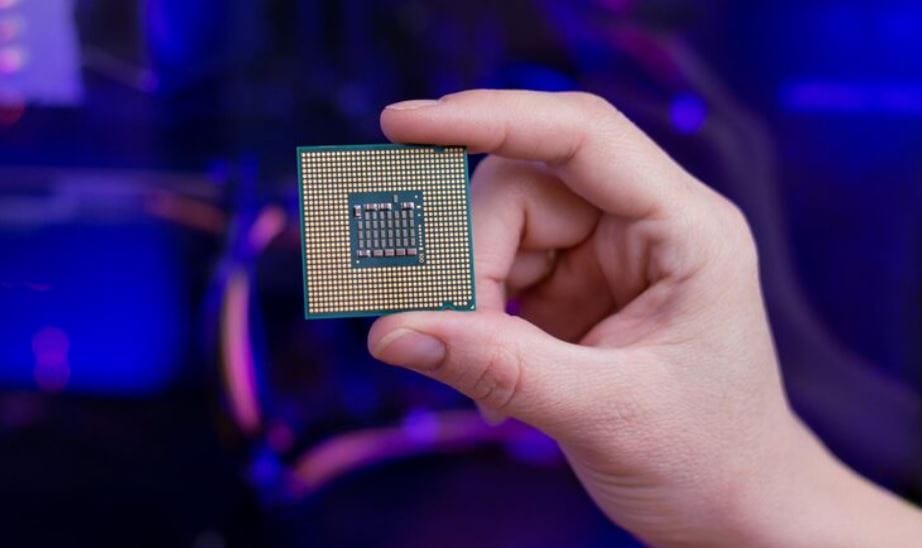
    Why Optical Computing Could Be the Successor to the Silicon Chip
    Why Optical Computing Could Be the Successor to the Silicon Chip

    Both have developed chips utilizing Mach-Zehnder interferometers, which split and recombine light waves to perform matrix multiplication, the unglamorous but crucial math that underpins the majority of contemporary neural networks. These devices are the result of MIT research. According to reports, Lightmatter has performed AI workloads several times faster and with significantly less power than comparable GPU systems.

    However, it’s important to be truthful about the catch. Since there is currently no true photonic equivalent of RAM, optical chips are still unable to store memory as light. As a result, the majority of these systems continuously convert signals between optical and electrical, which reduces the efficiency gains that initially make light appealing.

    Manufacturing is also harsh: the industry still lacks the kind of standardized design guidelines that made silicon so inexpensive to mass-produce, and alignment must be exact to a fraction of a wavelength. A startup called Akhetonics is pursuing fully optical logic, which uses materials like graphene to directly control light. According to its own roadmap, a functional all-optical processor won’t be available until around 2027. This isn’t coming next year, just based on that timeline.

    Something messier and more gradual than a smooth transition from silicon to light seems more likely, at least for the time being. Data centers are already using optical interconnects to transfer data between racks and, increasingly, between chips. Full optical processors, which could eventually completely replace a CPU, are still more of a research project than a finished product. Before anything that resembles a true replacement for silicon actually appears on a shelf, it’s likely that the future will appear hybrid for a considerable amount of time, with electronics handling the logic and light handling the movement.

    Optical Computing Silicon Chip
    Share. Facebook Twitter Pinterest LinkedIn Tumblr Email
    Taylor Lowery
    • Website

    Taylor Lowery is a senior editor at glofiish.com, a technology writer, and a true circuit enthusiast. She works in the tech sector, so she does more than just cover it. Taylor works for a smartphone company during the day, which gives her a firsthand look at how gadgets are designed, manufactured, promoted, and ultimately placed in people's hands.Her writing is unique because of this insider viewpoint. Taylor makes the technical connections that other writers overlook, whether she's dissecting the silicon architecture of a new flagship chipset, analyzing the implications of a significant Android update for actual users, or tracking the effects of a new AI model announcement across the mobile industry.Her editorial focus covers every aspect of the current tech stack, including smartphone software and hardware, artificial intelligence (from large language models and generative tools to on-device inference), and the broader innovation trends influencing the direction of the consumer technology sector. She is especially passionate about the nexus of AI and mobile computing, which she feels is still in its most exciting early stages.

    Related Posts

    Why VCs Are Suddenly Pouring Billions Into De-Extinction Tech

    June 22, 2026

    The Quest for Quantum Supremacy: Who Actually Controls the Future of Computing?

    June 22, 2026

    The Rise of DIY Biohacking in Suburban Garages

    June 22, 2026
    Leave A Reply Cancel Reply

    You must be logged in to post a comment.

    Lifestyle

    Your Smartphone Knows You’re Depressed: The Alarming Science of Predictive Language

    By Taylor LoweryJune 22, 20260

    Finding out that your phone has been monitoring you more closely than your closest friends…

    The AI Phone Era Could Change How We Communicate Forever

    June 22, 2026

    Why VCs Are Suddenly Pouring Billions Into De-Extinction Tech

    June 22, 2026

    Memory Shortages Could Trigger the Biggest Smartphone Crash in a Decade

    June 22, 2026

    The Quest for Quantum Supremacy: Who Actually Controls the Future of Computing?

    June 22, 2026

    The Rise of DIY Biohacking in Suburban Garages

    June 22, 2026

    Why Optical Computing Could Be the Successor to the Silicon Chip

    June 22, 2026

    Why Your Next Smartphone Might Actually Be a Humanoid Robot

    June 22, 2026

    Why AI Might Be the Most Powerful Technology Since Electricity

    June 22, 2026

    A Massive AI Protest Signals Growing Public Fear of Automation

    June 22, 2026
    Disclaimer

    Glofiish.com’s content, which includes market reporting, technology analysis, AI commentary, and device coverage, is solely meant for general informational and educational purposes. Nothing on this website is intended to be financial, investment, legal, or professional technology advice specific to your situation.

    We’re strongly advise all readers to seek independent professional financial advice from a qualified financial adviser before making any financial, investment, or purchasing decisions based only on information found on this website. Technology markets are unstable; product availability, cost, and performance attributes fluctuate quickly.

    Facebook X (Twitter) Instagram Pinterest
    • Home
    • Glofiish Devices
    • Technology
    • Tech Devices
    • News
    • About
    • Privacy Policy
    • Contact Us
    • Terms Of Service
    © 2026 ThemeSphere. Designed by ThemeSphere.

    Type above and press Enter to search. Press Esc to cancel.