
Close Menu
GlofiishGlofiish
    Facebook X (Twitter) Instagram
    Facebook X (Twitter) Instagram
    GlofiishGlofiish
    Subscribe
    • Home
    • Glofiish Devices
    • Technology
    • Tech Devices
    • News
    • About
    • Privacy Policy
    • Contact Us
    • Terms Of Service
    GlofiishGlofiish
    Home » Why Silicon Valley’s Top AI Researchers Are Leaving Mega-Corps to Launch Niche Startups
    Technology

    Why Silicon Valley’s Top AI Researchers Are Leaving Mega-Corps to Launch Niche Startups

    Taylor LoweryBy Taylor LoweryAugust 13, 2026Updated:August 13, 2026No Comments4 Mins Read
    Facebook Twitter Pinterest LinkedIn Tumblr Email
    Share
    Facebook Twitter LinkedIn Pinterest Email

    A tiny group of former Google researchers are working on something they couldn’t do at Google in a converted warehouse space south of Market Street in San Francisco, the kind of structure that formerly housed printing equipment but now holds individuals debating transformer architectures. Not because the work was prohibited. due to the work’s constant deprioritization. The roadmap would be updated, the quarterly review would occur, and the long-term research project that everyone thot was intriguing would be postponed for an additional six months in favor of something with more obvious short-term income ramifications. Several of them made the decision to depart after the third or fourth cycle of this.

    For the better part of three years, this scenario has been unfolding throughout Silicon Valley in different shapes and at different companies. Researchers who understand the architecture of large language models as engineers who designed the training runs rather than as users or managers have been leaving Google, Meta, OpenAI, and Microsoft Research in significant numbers to work on the most important AI systems of the last ten years. A few are joining other well-known labs. An increasing number are taking a more disruptive approach by launching their own businesses, which are sometimes extremely small and concentrated on a particular issue that the big labs weren’t going to give priority to.
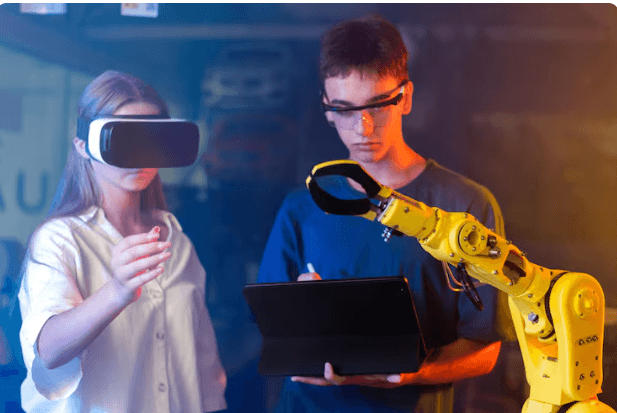
    Why Silicon Valley’s Top AI Researchers Are Leaving Mega-Corps to Launch Niche Startups
    Why Silicon Valley’s Top AI Researchers Are Leaving Mega-Corps to Launch Niche Startups

    In interviews and sometimes in public writing, the explanations they provide tend to revolve around a few recurring themes. The most often mentioned is bureaucracy. Accessing the computing resources required for meaningful model training at a corporation the scale of Google or Meta necessitates navigating internal allocation procedures that can take months and yield unclear results. The data center has the GPU clusters and TPU pods that a researcher needs to test a theory.

    It is a different story when they are assigned to a non-commercial research project. There is intense internal competition for compute, and projects without a distinct product team typically lose to those that do. This friction builds up into something that begins to feel insurmountable for academics whose work operates on timetables longer than a product plan.

    Leaving is now more feasible than it would have been in previous cycles because to the venture capital climate. VC firms that have been observing the AI trend for years are now paying founding teams whose main qualification is their work at a major lab, often in very large sums. A revenue model is not necessary for the first year of the presentation. It needs a specific problem, a trustworthy team, and proof that the team is more knowledgeable about the issue than the general public. That accreditation is significant for a researcher who worked on graph neural networks or protein structure prediction for five years at DeepMind. Credibility comes before money, and effort comes before credibility.

    Focus is what the niche startup model provides that the mega-corp does not. It is not necessary for an eight-person team working on automated scientific discovery to consider if the output supports a quarterly earnings call or interacts with an advertising platform. The limitation is more straightforward: is the research successful enough that funding for it or the following phase will be provided? For those who have spent years navigating the complexities of enormous organizations, this simplicity is truly appealing. Startups bring their own stresses and limitations, so it’s possible that the attractiveness is partially deceptive. However, the particular pressures are distinct, and for some researchers, that’s sufficient.

    These firms’ aims provide insight into where the researchers believe the most important unresolved issues are. Former lab researchers continue to find automated scientific discovery—which uses AI to speed up hypothesis generation and experimental design across domains including materials science, drug discovery, and climate modeling—to be an appealing category. It tackles issues that are truly significant outside of the technology industry, is technically challenging, and has not been resolved by general-purpose frontier models. Similar principles apply to biotech AI, specialized enterprise reasoning systems, and domain-specific models for industries like law and medicine: high value, sufficiently specific to be manageable for a small team, and sufficiently removed from the major labs’ primary commercial priorities to avoid direct competition.

    Google DeepMind Meta AI Microsoft Research OpenAI Silicon Valley’s Top AI Researchers
    Share. Facebook Twitter Pinterest LinkedIn Tumblr Email
    Taylor Lowery
    • Website

    Taylor Lowery is a senior editor at glofiish.com, a technology writer, and a true circuit enthusiast. She works in the tech sector, so she does more than just cover it. Taylor works for a smartphone company during the day, which gives her a firsthand look at how gadgets are designed, manufactured, promoted, and ultimately placed in people's hands.Her writing is unique because of this insider viewpoint. Taylor makes the technical connections that other writers overlook, whether she's dissecting the silicon architecture of a new flagship chipset, analyzing the implications of a significant Android update for actual users, or tracking the effects of a new AI model announcement across the mobile industry.Her editorial focus covers every aspect of the current tech stack, including smartphone software and hardware, artificial intelligence (from large language models and generative tools to on-device inference), and the broader innovation trends influencing the direction of the consumer technology sector. She is especially passionate about the nexus of AI and mobile computing, which she feels is still in its most exciting early stages.

    Related Posts

    The Hydrogen Highway Myth , Inside California’s $10 Billion Clean Energy Gamble

    August 26, 2026

    Why the UK Government Created an Emergency Taskforce to Regulate Agentic Superintelligence

    August 25, 2026

    Inside the Cyberwar for Control of North America’s Interconnected Regional Energy Grids

    August 25, 2026
    Leave A Reply Cancel Reply

    You must be logged in to post a comment.

    Technology

    The Hydrogen Highway Myth , Inside California’s $10 Billion Clean Energy Gamble

    By Taylor LoweryAugust 26, 20260

    Arnold Schwarzenegger declared in 2004 that California will construct a Hydrogen Highway, a network of…

    Why the UK Government Created an Emergency Taskforce to Regulate Agentic Superintelligence

    August 25, 2026

    Inside the Cyberwar for Control of North America’s Interconnected Regional Energy Grids

    August 25, 2026

    Why Wall Street Analysts Are Downgrading Legacy Telecoms in Favor of Orbital Mesh Networks

    August 25, 2026

    Inside Wall Street’s $40 Billion Bet on Autonomous Deep-Sea Mining Technologies

    August 25, 2026

    Why Australian Miners Are Using Autonomous AI Agents to Locate Underground Mineral Deposits

    August 25, 2026

    The Hallucination Safeguard , How New Verification Layer Software Stops AI Mistakes

    August 25, 2026

    The Windows Mobile Resurgence , Why Gen Z Programmers in Brooklyn Reject iOS for Pocket PC OS

    August 25, 2026

    Inside the Melbourne Facility Training Physical AI Robots to Assist Elderly Citizens

    August 25, 2026

    Silicon Valley’s Quiet Obsession with Pre-Capacitive Touchscreens , The Glofiish Legacy

    August 25, 2026
    Disclaimer

    Glofiish.com’s content, which includes market reporting, technology analysis, AI commentary, and device coverage, is solely meant for general informational and educational purposes. Nothing on this website is intended to be financial, investment, legal, or professional technology advice specific to your situation.

    We’re strongly advise all readers to seek independent professional financial advice from a qualified financial adviser before making any financial, investment, or purchasing decisions based only on information found on this website. Technology markets are unstable; product availability, cost, and performance attributes fluctuate quickly.

    Facebook X (Twitter) Instagram Pinterest
    • Home
    • Glofiish Devices
    • Technology
    • Tech Devices
    • News
    • About
    • Privacy Policy
    • Contact Us
    • Terms Of Service
    © 2026 ThemeSphere. Designed by ThemeSphere.

    Type above and press Enter to search. Press Esc to cancel.