

There are labs deep within Apple’s Cupertino campus that are rarely seen by journalists and that the firm does not publicly discuss. These labs are located beyond the visiting areas, the product display halls, and the cafeterias that smell of whatever the engineers are eating at 2 p.m. on a Tuesday. Apple folklore describes the durability laboratories as spaces where iPhones are dropped thousands of times from exact heights onto perfectly calibrated surfaces until someone is happy that the number is high enough.
Though maybe more significant, the battery labs are less well-known. What transpires within them will ultimately reveal the reason why the battery feels like an afterthought, a problem that has plagued iPhone owners for as long as the gadget has been around.
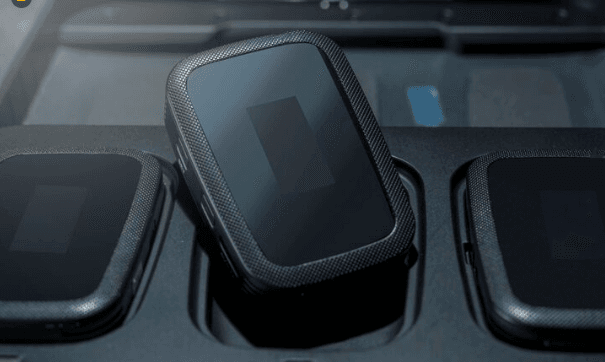
Unlike most Apple hardware rumors, which are based on analyst conjecture and supply chain rumors, Apple’s quiet transition to solid-state battery technology is not a rumor. TDK, Apple’s main battery supplier, recently reported a breakthrough in their CeraCharge solid-state technology, achieving a volumetric energy density of 1,000 Wh/L. This is an engineering project with a documented foundation.
That figure, which was attained by substituting a solid ceramic material for the liquid electrolyte found in a traditional battery, is a significant improvement over what is currently provided by lithium-ion cells. Existing batteries are unstable at high temperatures because of liquid electrolytes, which have the potential to leak, cause thermal runaway in the worst situations, and limit the amount of energy that can be securely contained in a given container. In theory, these limitations are eliminated when the liquid is removed.
In actuality, the engineering difficulties are significant enough that TDK is currently using CeraCharge in devices like the Apple Watch and AirPods, which have small form factors, low power requirements, and somewhat more forgiving manufacturing tolerances than a smartphone that must last years in a pocket. The challenge facing Apple’s labs, as well as the labs of all other battery companies researching this technology, is scaling a delicate ceramic electrolyte structure up to the size and energy requirements of an iPhone. That includes the silicon anode problem.
Compared to graphite, which is currently used in most lithium-ion anodes, silicon can store far more energy. However, after charging, silicon expands by up to 300%, expanding with each cycle in a way that, if left unchecked, would deform the battery and eventually the device surrounding it. Apple’s developers have been experimenting with ways to limit that growth, and some strategies are effective in lab settings. It is a completely different kind of difficulty to get them to function reliably over hundreds of millions of units at production scale.
High-silicon or silicon-carbon composite anodes, a material that combines the energy storage benefits of silicon with the structural stability of graphite to fall somewhere between the two in terms of capacity and durability, are the transitional step being discussed in the supply chain before a pure solid-state cell arrives.
Through this method, rumored configurations for future Pro Max models are getting close to 6,000 mAh, which would be a significant boost over current capacity without necessitating the complete manufacturing revolution that solid-state requires. It’s not a destination, but a bridge. However, bridges are important when the final objective is still a few building seasons away.
The timeframe that is most commonly mentioned in the hardware community links the significant redesign of the battery architecture to the 20th anniversary of the iPhone. This milestone has enough symbolic significance to support a truly revolutionary change rather than a gradual one. battery life of several days. quicker charging without deterioration from heat.
Instead of the deterioration that consumers now acknowledge as inevitable, a battery that retains more of its initial capacity after three years. It’s still uncertain if the anniversary will come before the technology or if the production scale issues will be resolved in time for that window. It’s clear that Apple understands how crucial it is to get this right by pushing suppliers like TDK, moving toward silicon anodes, and handling the structural difficulties in those unremarkable-looking facilities. Whether the chemistry concurs is the question.
