
Close Menu
GlofiishGlofiish
    Facebook X (Twitter) Instagram
    Facebook X (Twitter) Instagram
    GlofiishGlofiish
    Subscribe
    • Home
    • Glofiish Devices
    • Technology
    • Tech Devices
    • News
    • About
    • Privacy Policy
    • Contact Us
    • Terms Of Service
    GlofiishGlofiish
    Home » Why Canadian Forest Fire Service Is Deploying Autonomous Thermal-Sensing Drone Fleets
    Glofiish Devices

    Why Canadian Forest Fire Service Is Deploying Autonomous Thermal-Sensing Drone Fleets

    Taylor LoweryBy Taylor LoweryAugust 17, 2026No Comments4 Mins Read
    Facebook Twitter Pinterest LinkedIn Tumblr Email
    Share
    Facebook Twitter LinkedIn Pinterest Email

    In the northern British Columbian boreal forest, a fire that appeared confined at sundown has been doing what wildfires do when no one is looking, at around three in the morning on a nite when the wind has changed. Hours ago, the ground crews withdrew. The water bombers are grounded because they are too hazardous and dark to fly visually. There’s no waiting for the fire. After crossing a ridgeline and discovering dry fuel on the other side, it began moving in the direction of a fresh area of woodland that was not included in any containment strategy. The boundary had shifted by the time daybreak gives enough light for planes to evaluate the situation.

    For as long as aerial firefighting has been practiced, Canadian wildfire management organizations have had to contend with this pre-dawn gap. It’s not a personnel or planning failure. Systems designed for human pilots, who require daylight and generally calm conditions to function safely, are structurally limited. The issue has gotten worse as fire seasons have gotten longer and more intense. In Canada, the 2023 season burnt around 18 million hectares, which is almost twice the previous record. Since then, the seasons have persisted at a rate that has put a pressure on every aspect of the response system. The overnight hours have to be changed in some way.
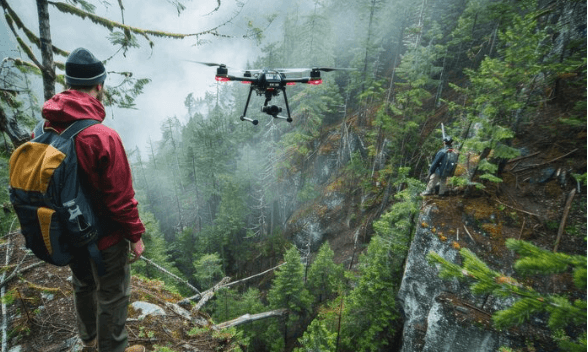
    Why Canadian Forest Fire Service Is Deploying Autonomous Thermal-Sensing Drone Fleets
    Why Canadian Forest Fire Service Is Deploying Autonomous Thermal-Sensing Drone Fleets

    The technology being used to alter them is autonomous thermal-sensing drones. In theory, the strategy is simple: UAVs with infrared and thermal imaging sensors may operate in smoke, at nite, and in areas that would be dangerous for manned aircraft. This allows them to continuously monitor active fire perimeters without endangering human pilots. The thermal sensors sense heat, which is produced in large quantities by a wildfire, thus they don’t require visible light. The active front, the smoldering interior, and the subsurface hotspots beneath ash that appear extinguished from the air but are still burning six inches below the surface are all vividly visible in thermal imaging of a fire that appears quiet and gloomy in a visual image.

    The final point is more important than it may first appear. Re-ignition, or declared-out fires that rekindle days later from embers that survived beneath ash or inside the root systems of fallen trees, is one of the most enduring issues in wildfire suppression. Throughout a sizable burned region, thermal sensors are able to locate those hidden heat sources at a spatial resolution that no surface team could accomplish in a reasonable length of time. Instead of having ground teams walk every square meter of burned area in the hopes of catching something they might miss, an autonomous drone can systematically scan a segment of containment line and highlight specific hotspot locations that they can then precisely target.

    The capacity transitions from detection to prediction at the AI layer on top of the thermal sensing. In order to provide incident commanders with decision-relevant information at a timeframe that truly permits a response, onboard models that process wind speed, terrain elevation, fuel moisture data, and current fire behavior can determine which parts of the perimeter are most likely to break out in the coming hours. Crews have adequate time to pre-position resources if a drone finds a wind-facing slope with dry fuel next to an active perimeter two hours before conditions worsen. The next morning, a manned airplane observation does not.

    Fire management organizations find the practical case of risk reduction for human firefighters to be just as persuasive as the operational capacity. One of the riskiest jobs in Canada is fighting wildfires, and the trend toward more intense fires has made it increasingly common for personnel to be required to work in hazardous conditions. When autonomous systems are tasked with surveillance and perimeter monitoring at the most hazardous times for human flight, a type of risk that humans wouldn’t have to bear if the technology could manage it effectively is eliminated.

    2023 Canadian wildfire season Autonomous Thermal-Sensing Drone Fleets Canadian Forest Fire Service Natural Resources Canada
    Share. Facebook Twitter Pinterest LinkedIn Tumblr Email
    Taylor Lowery
    • Website

    Taylor Lowery is a senior editor at glofiish.com, a technology writer, and a true circuit enthusiast. She works in the tech sector, so she does more than just cover it. Taylor works for a smartphone company during the day, which gives her a firsthand look at how gadgets are designed, manufactured, promoted, and ultimately placed in people's hands.Her writing is unique because of this insider viewpoint. Taylor makes the technical connections that other writers overlook, whether she's dissecting the silicon architecture of a new flagship chipset, analyzing the implications of a significant Android update for actual users, or tracking the effects of a new AI model announcement across the mobile industry.Her editorial focus covers every aspect of the current tech stack, including smartphone software and hardware, artificial intelligence (from large language models and generative tools to on-device inference), and the broader innovation trends influencing the direction of the consumer technology sector. She is especially passionate about the nexus of AI and mobile computing, which she feels is still in its most exciting early stages.

    Related Posts

    Silicon Valley’s Quiet Obsession with Pre-Capacitive Touchscreens , The Glofiish Legacy

    August 25, 2026

    The Tech Archival Movement , Why British Libraries Are Digitizing Vintage Glofiish Firmware

    August 18, 2026

    The Nostalgia Economy , Why Vintage Glofiish Smartphones Are Outperforming Stocks in 2026

    August 17, 2026
    Leave A Reply Cancel Reply

    You must be logged in to post a comment.

    Technology

    The Hydrogen Highway Myth , Inside California’s $10 Billion Clean Energy Gamble

    By Taylor LoweryAugust 26, 20260

    Arnold Schwarzenegger declared in 2004 that California will construct a Hydrogen Highway, a network of…

    Why the UK Government Created an Emergency Taskforce to Regulate Agentic Superintelligence

    August 25, 2026

    Inside the Cyberwar for Control of North America’s Interconnected Regional Energy Grids

    August 25, 2026

    Why Wall Street Analysts Are Downgrading Legacy Telecoms in Favor of Orbital Mesh Networks

    August 25, 2026

    Inside Wall Street’s $40 Billion Bet on Autonomous Deep-Sea Mining Technologies

    August 25, 2026

    Why Australian Miners Are Using Autonomous AI Agents to Locate Underground Mineral Deposits

    August 25, 2026

    The Hallucination Safeguard , How New Verification Layer Software Stops AI Mistakes

    August 25, 2026

    The Windows Mobile Resurgence , Why Gen Z Programmers in Brooklyn Reject iOS for Pocket PC OS

    August 25, 2026

    Inside the Melbourne Facility Training Physical AI Robots to Assist Elderly Citizens

    August 25, 2026

    Silicon Valley’s Quiet Obsession with Pre-Capacitive Touchscreens , The Glofiish Legacy

    August 25, 2026
    Disclaimer

    Glofiish.com’s content, which includes market reporting, technology analysis, AI commentary, and device coverage, is solely meant for general informational and educational purposes. Nothing on this website is intended to be financial, investment, legal, or professional technology advice specific to your situation.

    We’re strongly advise all readers to seek independent professional financial advice from a qualified financial adviser before making any financial, investment, or purchasing decisions based only on information found on this website. Technology markets are unstable; product availability, cost, and performance attributes fluctuate quickly.

    Facebook X (Twitter) Instagram Pinterest
    • Home
    • Glofiish Devices
    • Technology
    • Tech Devices
    • News
    • About
    • Privacy Policy
    • Contact Us
    • Terms Of Service
    © 2026 ThemeSphere. Designed by ThemeSphere.

    Type above and press Enter to search. Press Esc to cancel.